Mass communication(′mas kə′myü·nə′kā·shən)(communications) Communication which is directed to or reaches an appreciable fraction of the population.) technically refers to the process of transferring or transmitting a message to a large group of people — typically, this requires the use of some form of media such as newspapers, television, or the Internet. Another definition of the term, and perhaps the most common one, refers to an academic study of how messages are relayed to large groups of people instantaneously. This area of study, most often referred to as mass comm, is offered at many colleges and universities worldwide as an area of study, and some colleges teach nothing but mass comm. Due to its pertinence to all people around the world, mass comm is becoming more popular and may offer graduates careers in various countries worldwide.
जनसंचार (Mass communication) से तात्पर्य उन सभी साधनों के अध्ययन एवं विश्लेषण से है जो एक साथ बहुत बड़ी जनसंख्या के साथ संचार सम्बन्ध स्थापित करने में सहायक होते हैं। प्रायः इसका अर्थ सम्मिलित रूप से समाचार पत्र, पत्रिकाएँ, रेडियो, दूरदर्शन, चलचित्र से लिया जाता है जो समाचार एवं विज्ञापन दोनो के प्रसारण के लिये प्रयुक्त होते हैं।
जनसंचार माध्यम में संचार सब्द की उत्पति संस्कृत के चार धातु से हुई है जिसका अर्थ है चलना अथवा जब हम भव या जानकारी को एक से दुसरे तक पहुचाते है और वह प्रक्रिया सामूहिक रूप मैं होतब वह जनसंचार कहलाती है ! कोम्युनिकेसन शब्द की उत्पति लैटिन के 'कम्युनिस्ट' शब्द से मIणि गयी है ! जिसका अर्थ है सम्प्रेसन द्वारा किसी के भावनाओ को उसके विचारो एवं अनुभूतियो को खोलकर पढ़कर देखकर नियंत्रित करना ! जनसंचार का अर्थ बताना चलाना फैलाना भी है मूलतः तीन तत्वों से संचार की सरंचना होती है १) संचालक २) सन्देश ३) प्राप्तकर्ताजनसंचार के कई स्वरुप है जैसे :- पत्र पत्रिकाए, पुस्तके, रेडिओ, टी.वि, न्यूज़ पेपर, कंप्यूटर, इन्टरनेट,
जनसंचार के माध्यमो द्वारा हम बहूत से श्रोताओ को प्रभावित कर सकते है! जनसंचार का की सफलता का सारा अर्जन उसमे प्रयुक्त भाषा को जाता है सर्वेश कमलेश तिवारी जी के अनुशार जनसंचार माध्यम उन्मध्यमो को कहा जाता है जिसके द्वारा एक समूह मैं किसी भी सन्देश सुचना को बड़ी तेज़ी से पहुचाया जा सके!
The term mass communication was coined in the 1920s, with the advent of nationwide radio networks, newspapers, and magazines, which were circulated among the general public. The distribution of information to a wide range of people remains the main function of mass communications, even today. Mass communications are widely used, primarily because it is a rewarding exercise which may award a person or company with brand and name recognition, instantly increasing credibility. Commonly used units for analysis of mass communications are the messages, medium for communication, and the audience for whom the message is intended.
Interest in mass communications is an area of academic study that has grown steadily, and includes the study of the ways people and groups relay messages to a large audience. A number of leading educational institutions offer majors in mass communications, and many graduates in mass comm can find jobs in the news media, advertising or public relations agencies, publishing houses, and research institutes. With the growing popularity of the Internet, the demand for writers who can generate content for the online space is growing steadily, and a number of mass comm graduates are taking up content writing for the Internet as a lucrative career option.
Changing times have revolutionised prospects in all most every career field one can find today. So many new and exciting career options are lined ahead that it is difficult to choose one. Mass communication is one such field which is attracting a lot of young these days and why not, when it has to offer such interesting career options in the fields, like various kinds of medias - newspapers, magazines, radio, television, advertisements, public relations etc. Though its presence has been there since long but it is only in recent times that it's been able to earn due recognition. Efforts are on to add professionalism to different areas of mass communication, with many universities and institutions offering number of professional courses. Mass communication covers a wide area, comprising of closely related fields of advertisement, communication and public relations. Almost all kinds of establishments whether business, government or political are availing of services, offered by these industries, therefore an encouraging sign for those looking ahead to making a career in mass communication.
Nature Of Work
Personality
जनसंचार (Mass communication) से तात्पर्य उन सभी साधनों के अध्ययन एवं विश्लेषण से है जो एक साथ बहुत बड़ी जनसंख्या के साथ संचार सम्बन्ध स्थापित करने में सहायक होते हैं। प्रायः इसका अर्थ सम्मिलित रूप से समाचार पत्र, पत्रिकाएँ, रेडियो, दूरदर्शन, चलचित्र से लिया जाता है जो समाचार एवं विज्ञापन दोनो के प्रसारण के लिये प्रयुक्त होते हैं।
जनसंचार माध्यम में संचार सब्द की उत्पति संस्कृत के चार धातु से हुई है जिसका अर्थ है चलना अथवा जब हम भव या जानकारी को एक से दुसरे तक पहुचाते है और वह प्रक्रिया सामूहिक रूप मैं होतब वह जनसंचार कहलाती है ! कोम्युनिकेसन शब्द की उत्पति लैटिन के 'कम्युनिस्ट' शब्द से मIणि गयी है ! जिसका अर्थ है सम्प्रेसन द्वारा किसी के भावनाओ को उसके विचारो एवं अनुभूतियो को खोलकर पढ़कर देखकर नियंत्रित करना ! जनसंचार का अर्थ बताना चलाना फैलाना भी है मूलतः तीन तत्वों से संचार की सरंचना होती है १) संचालक २) सन्देश ३) प्राप्तकर्ताजनसंचार के कई स्वरुप है जैसे :- पत्र पत्रिकाए, पुस्तके, रेडिओ, टी.वि, न्यूज़ पेपर, कंप्यूटर, इन्टरनेट,
जनसंचार के माध्यमो द्वारा हम बहूत से श्रोताओ को प्रभावित कर सकते है! जनसंचार का की सफलता का सारा अर्जन उसमे प्रयुक्त भाषा को जाता है सर्वेश कमलेश तिवारी जी के अनुशार जनसंचार माध्यम उन्मध्यमो को कहा जाता है जिसके द्वारा एक समूह मैं किसी भी सन्देश सुचना को बड़ी तेज़ी से पहुचाया जा सके!
The term mass communication was coined in the 1920s, with the advent of nationwide radio networks, newspapers, and magazines, which were circulated among the general public. The distribution of information to a wide range of people remains the main function of mass communications, even today. Mass communications are widely used, primarily because it is a rewarding exercise which may award a person or company with brand and name recognition, instantly increasing credibility. Commonly used units for analysis of mass communications are the messages, medium for communication, and the audience for whom the message is intended.
Interest in mass communications is an area of academic study that has grown steadily, and includes the study of the ways people and groups relay messages to a large audience. A number of leading educational institutions offer majors in mass communications, and many graduates in mass comm can find jobs in the news media, advertising or public relations agencies, publishing houses, and research institutes. With the growing popularity of the Internet, the demand for writers who can generate content for the online space is growing steadily, and a number of mass comm graduates are taking up content writing for the Internet as a lucrative career option.
Changing times have revolutionised prospects in all most every career field one can find today. So many new and exciting career options are lined ahead that it is difficult to choose one. Mass communication is one such field which is attracting a lot of young these days and why not, when it has to offer such interesting career options in the fields, like various kinds of medias - newspapers, magazines, radio, television, advertisements, public relations etc. Though its presence has been there since long but it is only in recent times that it's been able to earn due recognition. Efforts are on to add professionalism to different areas of mass communication, with many universities and institutions offering number of professional courses. Mass communication covers a wide area, comprising of closely related fields of advertisement, communication and public relations. Almost all kinds of establishments whether business, government or political are availing of services, offered by these industries, therefore an encouraging sign for those looking ahead to making a career in mass communication.
Nature Of Work
Mass communication is a vast field covering many areas under it. Some of
these are discussed under the following headings.
- PRINT JOURNALISM: In short, journalism is
collecting and editing of news for presentation through media. Print journalism
has been one of the oldest forms of journalism. Newspapers and magazines, big or
small have always been major source of news and information throughout the world
and millions of readers go through them daily. Over the years, print journalism
has witnessed major transformation, the simple reporting of yesteryears has
taken a shape of highly specialized and professional field owing to competition
and other factors. The newspapers and magazines today cover a wide range of
specialized sections like political events, business news, leisure, cinema,
sports, career, health and so many other subjects, which demands for
professionally qualified journalists. Given the variety of subjects to choose
from, one can look forward to a field of his interest and pursue several
avialable courses in that direction.
- ELECTRONIC JOURNALISM: Introduction of
electronic communicaiton especially through broadcasting has affected the
lifestyles and thoughts of masses. Communication mediums like television, radio,
audio, video etc. has made possible news, entertainment, information, education
related subjects reach the very far and wide places. It has to an extent
sidelined other forms of communication. With the growing network of TV,
satellite communication, cable services, radio stations, etc., the future of
this industry seems bright. Electronic journalism offers to professionally
qualified aspirants opportunities in a number of fields. Some of these are
direction, production, camera, graphics, editing, sound, programme research,
script writing etc.
- FILMS - PRODUCERS, ACTORS, MUSICIANS AND
DANCERS When we talk of films today, there is no dearth of available
professional career options. Although, it is not all that easy to taste success
in one of the most competitive and sought after fields, but definitely for
someone sanguine and determined, it can be quite rewarding. Films have always
earned recognition and fascination of masses. There are so many different groups
of people associated with the so-called big screen and one has a variety to
choose from the available options from technical professions like directors,
producers, soundmen, lightmen, cameramen, editors etc. to artists like actors,
dancers, musicians, stuntmen etc.
The rapidly growing film industry and its certain future has led to various
institutes offering highly professional courses. One definitely finds it useful
to pursue these courses in order to hone their skills and make themselves better
to compete with the best in the industry.
- ADVERTISING: Advertising is brand building
process of a product, idea, thought or a even a service, through effective
mediums of communication. From newspapers, magazines, posters, signboards, bills
to the commercials on radio, television and even Internet, advertising has come
a long way. Business organisations, political organisations, social
organisations, all find it important to advertise in order to influence public
opinion.
Since advertising is a service industry, the reputation of the ad agency
depends on the effective work being done and campaign released from time to
time. This makes the job even more challenging. With the advent of the
multinational companies, more and more Indian agencies are tying up with the the
foreign agencies to pitch for international clients which is clearly indicative
of high growth in coming years in this industry.
- PUBLIC RELATIONS:Once, the simple operation of publicity, today has emerged as an important management function. Public Relations, as the name suggests, is used to generate and portray, positive image of an organisation by various means. Business houses, schools, universities, hospitals, government institutions, etc. engage public relations personnels and agencies to cast and present their image, objectives and policies in the best possible light. For somebody to become a successful public relation consultant, it is imperative to have a liking to meet people alongwith excellent communication skills, ability to interact with, convince people, and build a rapport is important. The other traits should be, quick decision making abilities and good organisational skills.
Personality
The sphere of mass communication being widely spread, requires a combination
of skills and traits. Different areas asks for different qualities, but for
anyone to take on any of the fields of mass communication definitely requires
better than average performance in whatever one does. It is not easy to get in
and progressing is even difficult. In general, excellent communication skills,
being a good team player are important, besides being confident and hardworking.
Physical stamina and will power count in favour for jobs in mass communication.
Other attributes vary from one another depending upon the area one pursues.
Career ProspectsDiversification in different areas of mass communication is witnessing a
steep rise and is expected to thrive further, on account of growing
professionalism and advancement in this sector. Anyone who is creative, dynamic,
enterprising and has a flair to project his ideas, thoughts, observation through
different mediums of communication can accomodate himself comfortably in this
industry. Computers, especially the advent of Internet has furthermore brought
new and challenging opportunities in the communication segment. It is attracting
a more and more people from traditional forms of mass media.
Opportunities for placement in diverse fields of mass communication are
available in publishing houses, radio and television companies, corporate world,
entertainment industry, media industry, advertising agencies, public relations
agencies, government organisations etc. As far as remuneration is concerned it
varies from one area of mass communication to another. However in every area, it
is much dependent on the size of the organisation, its location combined
together with the level of responsibility and experience of the candidate.

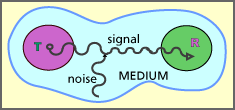
 through time and
space until it is encountered by the reader. The medium is light waves, and the
signal is formed as light bounces off of the paper and ink and into the reader's
eyes. While the text is in transit, noise may act to make it less understandable
-- the writing may fade, for example, or pages may be torn or missing.
This is accurate as far as it goes, but it does little to demonstrate how
text relates to meaning. However, it is possible to produce a somewhat different
model that is more amenable to the discussion of meaning.
In this model the reader, the writer
through time and
space until it is encountered by the reader. The medium is light waves, and the
signal is formed as light bounces off of the paper and ink and into the reader's
eyes. While the text is in transit, noise may act to make it less understandable
-- the writing may fade, for example, or pages may be torn or missing.
This is accurate as far as it goes, but it does little to demonstrate how
text relates to meaning. However, it is possible to produce a somewhat different
model that is more amenable to the discussion of meaning.
In this model the reader, the writer 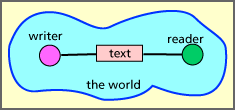 and the text exist in the world, which is their environment and with
which they interact. The reader and the writer interact directly with the text,
and indirectly with one another by means of the text, which itself becomes a
medium of communication. Thus, reader, writer and text are seen as an
interconnected system.
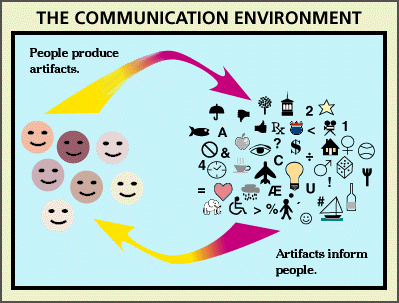
One way to interpret this model is to imagine that the writer, who has
thoughts to communicate, expresses them by creating a text. The reader and the
writer share a language code, and so when the reader encounters the text, he or
she becomes the receiver of the writer's thoughts.
But this description leads to a number of perplexing questions. For example:
and the text exist in the world, which is their environment and with
which they interact. The reader and the writer interact directly with the text,
and indirectly with one another by means of the text, which itself becomes a
medium of communication. Thus, reader, writer and text are seen as an
interconnected system.
One way to interpret this model is to imagine that the writer, who has
thoughts to communicate, expresses them by creating a text. The reader and the
writer share a language code, and so when the reader encounters the text, he or
she becomes the receiver of the writer's thoughts.
But this description leads to a number of perplexing questions. For example:
 when Herman
Melville wrote Moby Dick, he intended for us to read the book and understand his
thinking on the subject.
when Herman
Melville wrote Moby Dick, he intended for us to read the book and understand his
thinking on the subject.
 a life which
contains different experiences that of the writer. Consequently, the reader is
likely to make of the text something other than what the writer might have
expected.
In fact, those who adopt this approach point out that the reader need have no
knowledge of the writer at all. Nor does the reader need to be concerned as to
the writer's intentions. When the reader draws a meaning from the text, then
that meaning is the reader's and the reader's alone.
Anonymous text fits this approach well, but in fact, any text that is read
without knowledge of its author lends itself to the reader-oriented
approach.
For example, consider this quotation:
"And she understood that the hour had come to herself."
a life which
contains different experiences that of the writer. Consequently, the reader is
likely to make of the text something other than what the writer might have
expected.
In fact, those who adopt this approach point out that the reader need have no
knowledge of the writer at all. Nor does the reader need to be concerned as to
the writer's intentions. When the reader draws a meaning from the text, then
that meaning is the reader's and the reader's alone.
Anonymous text fits this approach well, but in fact, any text that is read
without knowledge of its author lends itself to the reader-oriented
approach.
For example, consider this quotation:
"And she understood that the hour had come to herself." 

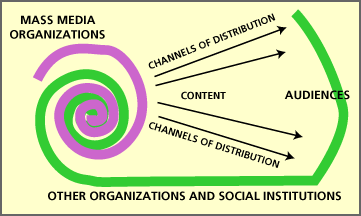
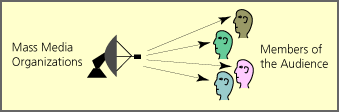
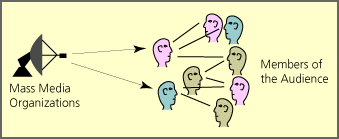
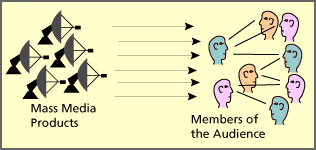
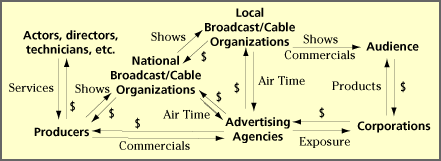
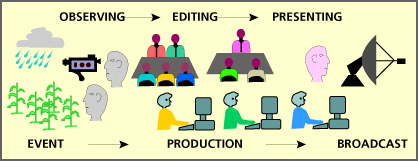
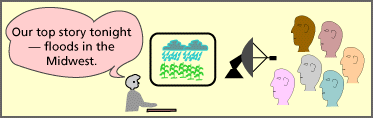
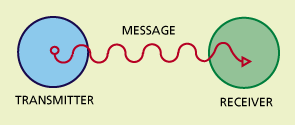 -- in fact too complex to be fully explained by the Shannon/Weaver
model.
The search for other explanatory models begins with the receiver. Human
beings become informed as they perceive data by means of their senses,
and as they organize this information and give it meaning. The
development of the semiotic model explains this process in terms of signs,
or perceptions that bring to mind concepts about the world. Signs can be
arranged in elaborate systems of codes, including the very complicated
codes that are called languages, and used as a means of communication.
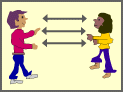
While much communication takes place in one-on-one, or face-to-face,
situations among individual human beings, communication can also take place in
groups, including the very large groups that compose the audiences of the
mass communication media. Thus, no communication is independent of the
social environment within which it occurs. In fact, in social situations it can
be said that one cannot not communicate.
-- in fact too complex to be fully explained by the Shannon/Weaver
model.
The search for other explanatory models begins with the receiver. Human
beings become informed as they perceive data by means of their senses,
and as they organize this information and give it meaning. The
development of the semiotic model explains this process in terms of signs,
or perceptions that bring to mind concepts about the world. Signs can be
arranged in elaborate systems of codes, including the very complicated
codes that are called languages, and used as a means of communication.
While much communication takes place in one-on-one, or face-to-face,
situations among individual human beings, communication can also take place in
groups, including the very large groups that compose the audiences of the
mass communication media. Thus, no communication is independent of the
social environment within which it occurs. In fact, in social situations it can
be said that one cannot not communicate. 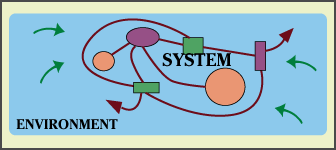
 Active
Environments
Active
Environments
 Members of an
ideology may hold beliefs that members of different ideologies others find
silly, inconvenient, or even hateful. However, to the member of the ideology
these beliefs are part of reality, and are therefore, by definition, true.
The theory of the social construction of reality argues that roles develop
within institutions. One of the things that makes ideologies powerful is that by
giving answers to important questions, they help define these institutional
roles. Thus, within a society with an unchallenged dominant ideology "everybody
knows their place" and there is no need to question rules or roles.
However, most societies contain a mix of ideologies. These are often
catagorized into three types: dominant, subordinate and radical.
Members of an
ideology may hold beliefs that members of different ideologies others find
silly, inconvenient, or even hateful. However, to the member of the ideology
these beliefs are part of reality, and are therefore, by definition, true.
The theory of the social construction of reality argues that roles develop
within institutions. One of the things that makes ideologies powerful is that by
giving answers to important questions, they help define these institutional
roles. Thus, within a society with an unchallenged dominant ideology "everybody
knows their place" and there is no need to question rules or roles.
However, most societies contain a mix of ideologies. These are often
catagorized into three types: dominant, subordinate and radical.
 For example, the
wars of the Protestant Reformation in Europe were fought between two strongly
ideological groups, the Protestant Christians and the Roman Catholic Christians.
Although the two groups shared many beliefs and customs, they took opposing
positions on certain concepts, and when these two groups with their different
realities tried to share the same space, the result was a bloody and devastating
war.
This aspect of ideology is especially visible in mass communication.
Newspapers and magazines which are owned by individuals or groups who subscribe
to a particular ideology often adjust the content of their messages accordingly.
The same news event may be described very differently in a "liberal" as opposed
to a "conservative" newspaper. Or some television stations may put restrictions
on the types of shows that they will allow on the air. Campaigns to remove
"sex," "violence," "drugs," "crime" and other themes from the mass media, or to
add themes relating to various races, classes and genders are examples of action
based on ideological commitment. Patriarchy
For example, the
wars of the Protestant Reformation in Europe were fought between two strongly
ideological groups, the Protestant Christians and the Roman Catholic Christians.
Although the two groups shared many beliefs and customs, they took opposing
positions on certain concepts, and when these two groups with their different
realities tried to share the same space, the result was a bloody and devastating
war.
This aspect of ideology is especially visible in mass communication.
Newspapers and magazines which are owned by individuals or groups who subscribe
to a particular ideology often adjust the content of their messages accordingly.
The same news event may be described very differently in a "liberal" as opposed
to a "conservative" newspaper. Or some television stations may put restrictions
on the types of shows that they will allow on the air. Campaigns to remove
"sex," "violence," "drugs," "crime" and other themes from the mass media, or to
add themes relating to various races, classes and genders are examples of action
based on ideological commitment. Patriarchy
 current debate on
abortion in the United States. One side argues in favor of the idea that it is
wrong for one human being to kill another, and one side argues in favor of the
idea that it is wrong for the government to interfere in the personal lives of
its citizens.
current debate on
abortion in the United States. One side argues in favor of the idea that it is
wrong for one human being to kill another, and one side argues in favor of the
idea that it is wrong for the government to interfere in the personal lives of
its citizens.
 the group. But
ideologies manifest themselves in the actions of individuals.
the group. But
ideologies manifest themselves in the actions of individuals.

 Innis argues that
communication media play a significant role in the overall organization of a
society because the dominant media of expression influence the kinds of human
relationships that can develop among the members of the society. In this regard
he divides media into two categories, time-binding and space-binding.
Innis argues that
communication media play a significant role in the overall organization of a
society because the dominant media of expression influence the kinds of human
relationships that can develop among the members of the society. In this regard
he divides media into two categories, time-binding and space-binding.
 Print is an example
of a space-binding medium. When traditions can be written down, they become
"laws." Everyone who can read has access to the laws, and everybody notices when
they change. Print encourages the development of economic institutions such as
banks and trading companies, and also the development of bureaucratic
government. These tend to focus attention on economic growth and on the "state."
Print is an example
of a space-binding medium. When traditions can be written down, they become
"laws." Everyone who can read has access to the laws, and everybody notices when
they change. Print encourages the development of economic institutions such as
banks and trading companies, and also the development of bureaucratic
government. These tend to focus attention on economic growth and on the "state."

 Some people argue
that as more and more services are carried out via cable systems and computer
networks, that these, too, should be regulated as public utilities. The debate
on this issue involves questions about public access to public information, the
right to privacy, the cost of setting up "information utilities" and so on. This
issue is important not only to those who might be denied access, but also to
media organizations who might be subject to government regulation in the future.
Some people argue
that as more and more services are carried out via cable systems and computer
networks, that these, too, should be regulated as public utilities. The debate
on this issue involves questions about public access to public information, the
right to privacy, the cost of setting up "information utilities" and so on. This
issue is important not only to those who might be denied access, but also to
media organizations who might be subject to government regulation in the future.
 Notice how this ties in
with Innis' notion of time-binding media. With the advent of writing a culture's
history and its rules can be recorded, and more importantly, easily edited.
Notice how this ties in
with Innis' notion of time-binding media. With the advent of writing a culture's
history and its rules can be recorded, and more importantly, easily edited.
 ...oral
memorization is subject to variation from direct social pressures. Narrators
narrate what audiences call for or will tolerate. When the market for a printed
book declines, the presses stop rolling but thousands of copies may remain.
...oral
memorization is subject to variation from direct social pressures. Narrators
narrate what audiences call for or will tolerate. When the market for a printed
book declines, the presses stop rolling but thousands of copies may remain.
 The
push to make the written word available to people in their own languages
impacted first on the most highly educated members of the society.
The
push to make the written word available to people in their own languages
impacted first on the most highly educated members of the society.
 With no way of keeping
extensive records, and no way of transmitting large amounts of information over
distances, oral societies do not develop scientific and industrial
infrastructures. However, as records began to accumulate in Europe after the
invention of print, theorists gained the ability to "compare notes." This was
particularly effective with regard to scientific research - a method that
depends on constant review of recorded data.
With no way of keeping
extensive records, and no way of transmitting large amounts of information over
distances, oral societies do not develop scientific and industrial
infrastructures. However, as records began to accumulate in Europe after the
invention of print, theorists gained the ability to "compare notes." This was
particularly effective with regard to scientific research - a method that
depends on constant review of recorded data.